
'When markets go into a budget with excessive optimism, the risk of disappointment is higher.'

India's fast-moving consumer goods (FMCG) sector witnessed growth in rural consumption in volume terms outpace urban consumption for the first time in five quarters, in the January-March period. According to a report from consumer intelligence firm NIQ, rural consumption grew at a rate of 7.6 per cent year-on-year (Y-o-Y) in Q1CY24, overtaking that in urban areas which stood at 5.7 per cent.

Daily essentials and food products will be cheaper from Monday, as leading FMCG companies have slashed prices, extending GST cut benefits to consumers.
India's fast-moving consumer goods (FMCG) sector grew 5.7 per cent by value and 4.1 per cent by volume in the July-September quarter driven by rural demand, consumer intelligence firm NielsenIQ said in its quarterly update on Thursday. Price-led growth stood at 1.5 per cent. According to NielsenIQ data, rural volume growth outpaced urban markets for the third straight quarter despite consumption softening in both regions.

FMCG major Nestle India Ltd on Thursday reported a 17.37 per cent decline in consolidated net profit to Rs 743.17 crore for the September 2025 quarter.

Analysts have sharply reduced cigarette maker ITC's earning estimates for the next two years, fearing a significant dent in the company's profitability and margins. This is owing to a steep hike in excise duty on tobacco by the government.

The banking, financial services and insurance (BFSI) sector has moved back into focus for investors this calendar year, after lagging the broader market for two consecutive years. BFSI stocks have outperformed benchmark indices in 2025 so far, driving a steady rise in the sector's weighting within the Nifty 50 index.
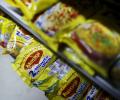
The turnover of FMCG major Nestle India's has grown 2.5 folds to Rs 20,100 crore in last one decade, post the Maggi crisis in 2015, according to the company's latest annual report. At the time of crisis, Nestle India's turnover was at Rs 8,100 crore.

So far this year, the rupee has fallen by 4.2 per cent, the worst among its Asian peers.

The slowdown in private consumption in the economy is taking a toll on the growth of fast-moving consumer goods (FMCG). The net sales growth of listed FMCG companies hit a 14-quarter low of 2.5 per cent in October-December 2023 (Q3FY24). This is the lowest revenue growth for the industry since the June 2020 quarter, when the FMCG firms in the Business Standard sample had reported a 13.2 per cent Y-o-Y decline in combined net sales owing to the lockdown.

Promoters' ownership in private listed companies declined to an eight-year low of 40.58 per cent as of June 30, 2025, following a net share sale worth Rs 54,732 crore during the quarter, according to data from primeinfobase.com, an initiative of PRIME Database Group.

'I do believe there will be a resolution in the next couple of months on the penal tariff and hopefully on the reciprocal tariff also.'
Fast-moving consumer goods (FMCG) companies anticipate sustained volume pressures in the January-March quarter (Q4) coupled with sluggish rural growth during the period. Brokerages estimate top-line growth to be in low single digits in the quarter. Also, the late onset of winter had an impact on demand for winter products which range from moisturisers to hot beverages.

From the 30-share pack, Hindustan Unilever, Tata Motors, Axis Bank, Nestle India, Asian Paints, ITC, Reliance Industries, Mahindra & Mahindra, IndusInd Bank and State Bank of India were among the laggards. Larsen & Toubro, Tata Steel, JSW Steel, HDFC Bank, Adani Ports, Kotak Mahindra Bank, Bharti Airtel and PowerGrid were among the gainers.

Among the Sensex firms, Bharat Electronics Ltd, Mahindra & Mahindra, Adani Ports, HCL Technologies, Eternal, Infosys, Bharti Airtel, Sun Pharmaceuticals, Larsen & Toubro, Hindustan Unilever and UltraTech Cement were the gainers. Bajaj Finance, Tata Motors Passenger Vehicles, Kotak Mahindra Bank, PowerGrid and Tata Steel were among the laggards.

'In the long run, India's strong growth story and reforms to make assets globally attractive will determine the rupee's resilience.'

It is a marketplace of attention, where legacy publishers, global franchises, and consumer brands meet to make the most of India's expanding fandom economy.

Fast-moving consumer goods (FMCG) companies, retail firms, and producers of consumer durables are witnessing stable urban demand. However, people in the trade are waiting for clearer signs of revival closer to the festival season, starting in September.

Leading FMCG companies have announced a price cut on their products, including soaps, shampoo, baby diapers, toothpaste, razors, and after-shave lotions, effective from September 22 to extend the GST rate cut benefits to consumers. Firms such as Procter & Gamble, Emami and HUL have come up with new price lists which have been communicated to their respective distributors and consumers through their respective websites.

The K-shaped economic recovery in India from the pandemic slowdown shows in corporate results as well. The automobile sector, which represents big-ticket consumption, continues to do well and has increased its share in corporate revenues and profits while fast-moving consumer goods (FMCG) companies that sell low-ticket consumer goods are struggling with poor sales and earnings growth. The share of the automobile sector, including makers of auto ancillaries, in corporate net sales rose to a 10-quarter high of 10.05 per cent during July-September 2023 (Q2FY24) from 8.94 per cent a year earlier and 9.75 per cent in Q1FY24.

Among Sensex firms, Hindustan Unilever dropped the most by 3.20 per cent. UltraTech Cement, Kotak Mahindra Bank, Adani Ports, Titan, HDFC Bank and Axis Bank were also among the laggards. However, Bharti Airtel, ICICI Bank, Bharat Electronics and Sun Pharma were among the gainers.
In India, fast-moving consumer goods (FMCG) majors continue to hold sway, with incumbent brands cornering 65 per cent of the market share, shows a Bain & Company report. While identifying the continued preference of Indians for incumbent brands, the report says that the dominance of general trade in the country has allowed national brands to maintain their supremacy. The low penetration of e-commerce in the country has also helped large brands.

Reliance Industries (RIL) annual general meeting (AGM) had several stunning announcements. RIL looks to list Jio Platforms (JPL) by June 2026. It targets doubling of FY22 earnings before interest, taxes, depreciation and amortisation (Ebitda) (Rs 1.25 trillion; $14.6 billion) by FY27 implying 14.7 per cent compound annual growth rate (CAGR) over the FY22 levels.

'The DNA of Tata Consumer Products is all food and beverage.'

Festive buying spree unleashed by lower tax rates pushed gross GST collection to about Rs 1.96 lakh crore in October, registering a 4.6 per cent year-on-year growth -- the slowest rate so far this fiscal.

Procter & Gamble has announced Shailesh Jejurikar as its next CEO, effective January 1, 2026. Jejurikar, an India-born executive, will succeed Jon Moeller in the role.

'Instead of one or two families controlling 10% to 15% of GDP, it has to be broad based. Then, the resilience of the economy also will be higher.' 'Then, if something happens to one business, it will not hurt the economy badly.'

Among Sensex firms, Trent, Tech Mahindra, Hindustan Unilever, UltraTech Cement, Asian Paints, Eternal and ITC were the major laggards. Selling in HDFC Bank and ICICI Bank also dragged the key indices. However, Axis Bank, Bajaj Finance, Maruti and State Bank of India were among the gainers.

'Because of the size and complexity of the economy, we can address almost every job that is there, from agriculture farming to healthcare.'

From the Sensex firms, Eternal, Mahindra & Mahindra, Maruti, Bajaj Finance, Tata Steel, Bharti Airtel, Bajaj Finserv, Asian Paints, Power Grid and State Bank of India were among the laggards. Kotak Mahindra Bank, Axis Bank, Titan, HCL Tech, Tata Motors, Infosys and Tata Consultancy Services were the gainers.

Among the Sensex firms, Nestle rose the most by 4.66 per cent. NTPC rose by 2.16 per cent, Reliance Industries by 1.53 per cent, State Bank of India by 1.04 per cent and Hindustan Unilever by 1.03 per cent. ITC, Power Grid and Bajaj Finance were the major gainers. Wipro, Tata Consultancy Services, HCL Technologies, Tata Steel, Bajaj Finserv and Maruti were among the laggards.

'The frenzy for gold is primarily due to the uncertainty surrounding the tariff war.'

To shield against US President Donald Trump's tariff shock, analysts have been advising investors to focus on stocks of domestic-oriented companies, rather than export-centric ones, to minimise potential losses.

Priya Nair will become the first woman CEO and MD of Hindustan Unilever Ltd (HUL) effective August 1, 2025, with India's largest FMCG firm announcing her appointment on Thursday. Nair, currently president, Beauty & Wellbeing, Unilever, has been appointed for a period of five years.

Among the Sensex pack, HDFC Bank, ICICI Bank, Kotak Mahindra Bank, Bajaj Finance, IndusInd Bank, Bharti Airtel and Nestle were the biggest gainers. Tata Consultancy Services, Sun Pharma, Infosys and Tata Motors were among the laggards.

N Chandrasekaran, chairman of Tata Consumer Products, has said in the company's annual report for FY25 that India remains one of the bright spots of economic growth amid a volatile global environment. He said India's long-term growth was underpinned by strong demographic and economic fundamentals as well as structural reforms.

The country's Fast-moving consumer goods (FMCG) industry witnessed a consumption slowdown in the December quarter, with an overall "negative" volume growth, as consumers continue to reel under inflationary pressure, says a report. According to the report released by data analytics firm NielsenIQ on Thursday, in October-December, the FMCG industry grew 7.6 per cent in terms of value but its volume growth was (-) 0.3 per cent. "... Overall FMCG volume growth is negative, the absolute values, as well as volumes, continue to be above pre-Covid levels across markets," it said.
Companies manufacturing fast-moving consumer goods (FMCG) continue to see rural stress sustain and it continues to trail urban demand. At the Confederation of Indian Industry's FMCG summit, managements of various companies pointed out urban demand continued to grow while rural demand remained under pressure because incomes were under stress in rural areas. "Due to rural stress, volumes continue to remain an issue for the industry and we are yet to see any revival in demand," Sudhir Sitapati, managing director (MD) and chief executive officer (CEO) at Godrej Consumer Products

Colgate-Palmolive India's September quarter (Q2FY26) performance has reinforced concerns among brokerages about the company's continued market challenges.

'Defence, capital goods, engineering, capital market-related stocks, autos, and cement sectors are my bullish bets for Samvat 2082.'
